Monitoring and precise diagnostics for each individual cell
The mcc©-BMS monitors the operating condition and temperature of each cell instead of merely evaluating a module’s average values. This allows anomalies to be detected early and precisely traced to the affected cell position.
PTR: Warning while there is still time to act
The Predictive Thermal Runaway Detection identifies cell deviations that develop over time before they lead to an immediately critical situation. Depending on the type of fault, the mcc©-BMS can identify the affected cell weeks or even months in advance—particularly valuable in aviation and other safety-critical applications.
Individual cell replacement instead of replacing the entire battery pack
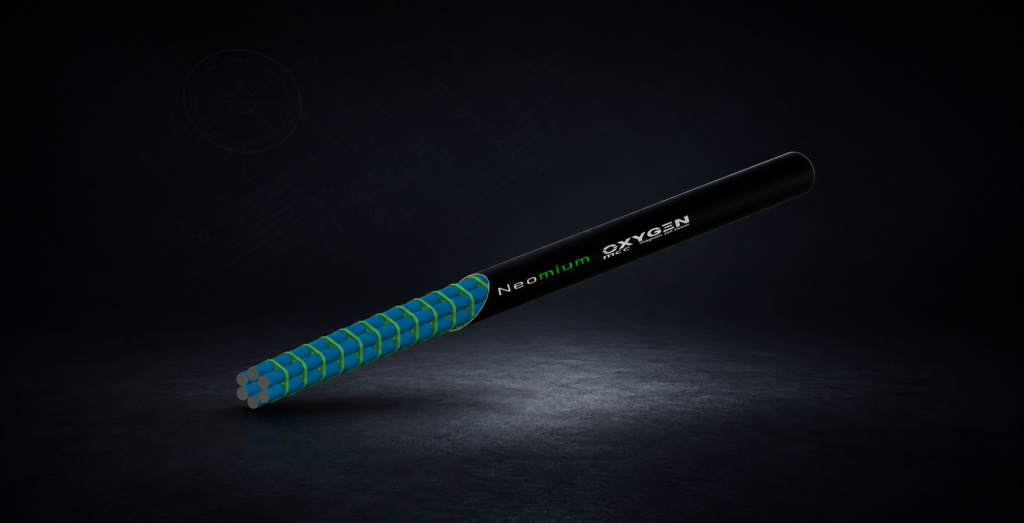
The cells are neither welded nor bonded but are connected reversibly within the patented Magnetic Cell Cluster architecture. An aged, underperforming, or anomalous cell can be selectively replaced as part of the designated service process.
Active prevention and passive protection against thermal propagation
BMS protection functions and individual cell monitoring are complemented by thermally effective separation elements and an enclosure tailored to the specific application. If a cell nevertheless enters thermal runaway despite preventive monitoring, the pack is designed to limit heat transfer to adjacent cells and prevent a chain reaction.
Longer economic service life of the battery system
A single aged cell no longer necessarily determines the end of life of the entire pack. By selectively replacing individual cells, the enclosure, electronics, and all cells that remain functional can stay in service—reducing replacement costs and unplanned downtime.
Serviceability directly at the point of use
The mcc©concept enables diagnostics and cell replacement without requiring the entire battery pack to be returned to the manufacturer for every repair. Depending on the application, replacement can be carried out by the operator, aircraft owner, or an appropriately trained service technician.
Optimized heat dissipation at the cell level
The cell arrangement and thermal connection to the enclosure support uniform axial heat dissipation. This reduces localized hot spots and keeps the cells within the most uniform possible temperature range, even under high power demands.
Integrated BMS with traceable operating data
The BMS provides relevant battery, diagnostic, and status information in real time. Rather than a generic “intuitive user interface,” operators and system integrators receive specific data for operation, maintenance, and fault analysis.
Interfaces for integration into ground vehicles and aircraft
Depending on the configuration, available interfaces include CAN, Ethernet, USB, Wi-Fi, and Bluetooth. This allows OXYGEN battery packs to be integrated into higher-level control systems, cockpit displays, diagnostic systems, and custom applications.
Scalable configuration of voltage, capacity, and power
The common mcc©platform can be configured for different system voltages, energy capacities, and load profiles. It therefore provides the technical basis for both standard cubic and cylindrical packs as well as fully customized battery form factors.
Flexibility in cell type and cell chemistry
The battery architecture is not inherently tied to a single cell manufacturer or specific cell chemistry. Cells can be selected based on energy density, power requirements, service life, temperature range, availability, and certification requirements.
Disassembly and separation of materials by type
Because the cells are not permanently welded or bonded, the battery system can be disassembled with minimal damage at the end of its service life. Functional components can be reused, while different materials can be directed more efficiently into the appropriate recycling streams.